
Supported digital companionship
A friendly voice for the quiet moments.
Comfort Companions offers AI-powered conversation and reassurance for older people during the long gaps between human contact.
A suitable companion is matched and introduced with support, so getting started feels personal, simple and comfortable.
Find out how Comfort Companions could work for your organisation:
Companionship alongside family, friends, carers and volunteers — never a replacement for human connection.
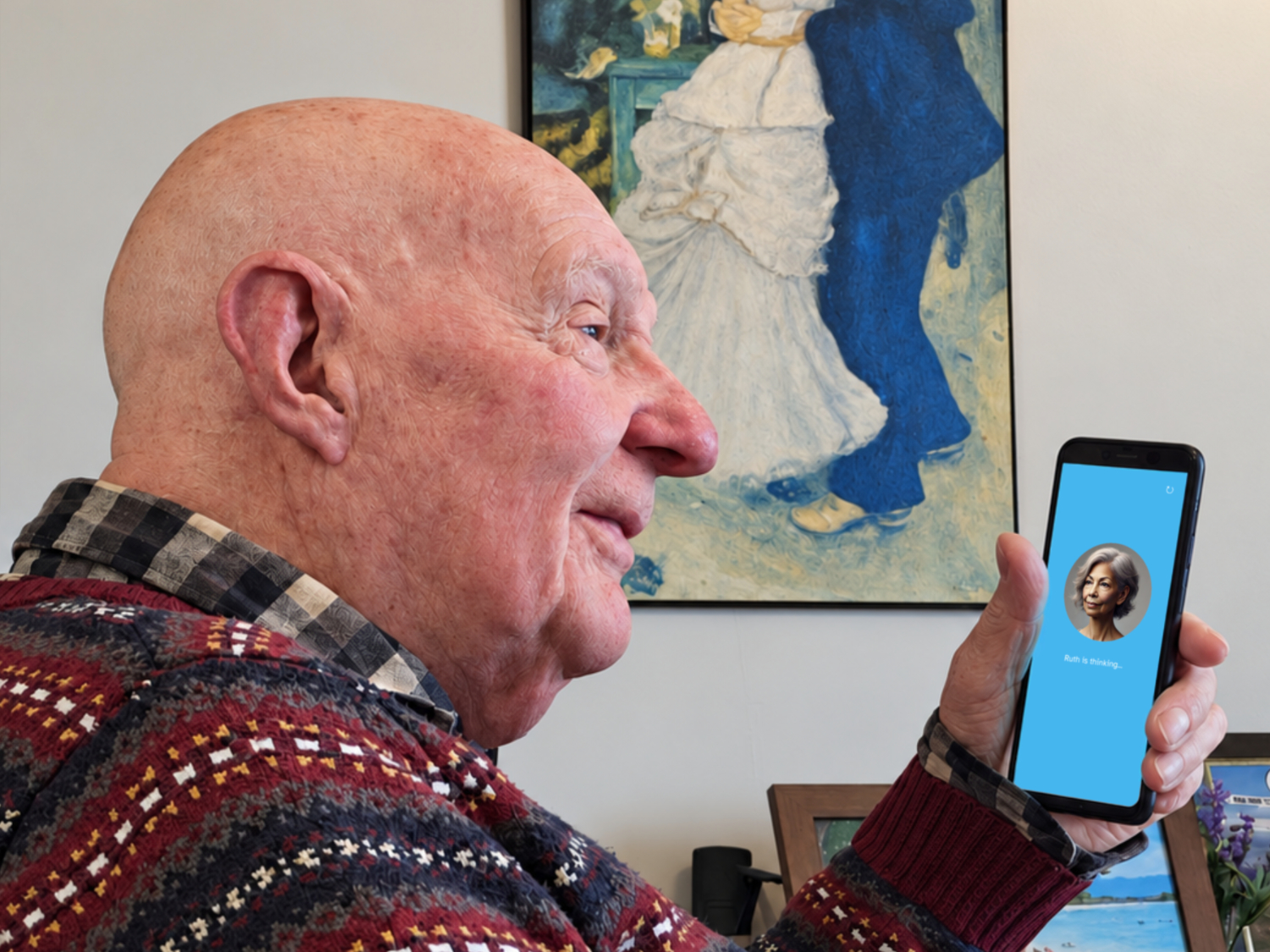
Why companionship matters
When quiet gaps last too long
Many older people experience loneliness because they do not have the conversation, reassurance or sense of being heard that they need. For some, this can mean days with little meaningful contact.
For others, it is felt most sharply after a call, visit or group has ended and everyone has gone back to their own lives.
Human support is essential. Families, friends, carers, volunteers and local services do vital work, but cannot always be there at the moment someone would value a voice to talk to.
We do not believe technology can cure loneliness. Loneliness is a human problem that ultimately calls for human connection. Comfort Companions is a tool designed to help with specific needs in quieter moments — to talk, feel heard and find reassurance.
Conversation without pressure
Comfort Companions is designed to help bridge the quieter spaces, offering calm, voice-led conversation alongside the people and services already around the older person.
There is no pressure to keep talking or explain everything. The person chooses when they would like a conversation.
- In the evening or at night
- Between visits, calls or activities
- When someone simply wants to be heard
Find your way
How would you like to explore Comfort Companions?
Different people come to Comfort Companions for different reasons. Choose the route that is most useful to you.
Older people and families
Find out how the service works and hear about wider availability as new supported access routes develop.
Get updates →Care providers
Explore how supported digital companionship could sit alongside existing care, family contact and safeguarding arrangements.
Explore care provider access →Community organisations
Explore how charities, community groups and local organisations could work with Comfort Companions to develop supported access for older people.
Explore community partnerships →Supporters and funders
Learn how funding and other practical support can help widen access to digital companionship for older people who might otherwise miss out.
Support our work →Simple, supported setup
How Comfort Companions works
Comfort Companions is more than an app download. Matching, setting up and checking that the experience is right for the person are all part of the service.
Find a suitable companion
A short matching process considers conversation preferences to help suggest one or two digital companions whose style may feel comfortable. It is not a clinical assessment.
Get started together
With a trusted person helping, the app is set up using an invitation passcode and the matched companion is introduced. The first conversation can be tried with support close by.
Talk when it suits
The person uses a simple tap-to-talk screen to speak and hear a natural spoken reply. Human support and agreed follow-up remain part of the arrangement.
Access is currently supported, not open public signup. A quiz result does not automatically create an app invitation or passcode. For news about availability, join the updates list.
Meet the voices
Meet the Comfort Companions
Meet ten AI-powered digital companions with different ways of talking, listening and offering support. Some are calm and steady, some practical and clear, and others more lively, curious or imaginative. People are matched with one or two companions through supported setup, rather than choosing freely from all ten.

Arthur
A steady presence
Arthur is patient and easy to talk to, with a calm style that suits gentle conversation and the comfort of familiar routines.

Charlie
A cheerful spark
Charlie brings warmth, humour and a bright outlook, helping everyday chats feel more uplifting, imaginative and full of life.

Dorothy
A warm listener
Dorothy is kind, reassuring and attentive, offering thoughtful company and a gentle space to share everyday worries or reflections.

Edith
A thoughtful mind
Edith enjoys meaningful discussion, clear thinking and careful reflection, making her well suited to conversations with a little depth.

Frank
A practical guide
Frank is calm, straightforward and down to earth, offering sensible conversation and clear thinking when life feels a bit tangled.

George
A clear thinker
George brings a measured approach to conversation, enjoying ideas, planning and steady discussion that helps bring structure to a topic.

June
A grounded voice
June is practical, calm and quietly supportive, offering clear-headed conversation with a no-fuss style and a warm touch.

Malcolm
A lively conversationalist
Malcolm is witty, curious and engaging, enjoying playful discussion, fresh viewpoints and conversations that keep the mind active.

Rosie
An uplifting spirit
Rosie is imaginative, upbeat and encouraging, helping bring energy, warmth and a more positive perspective to the day.

Ruth
A curious companion
Ruth combines warmth with quick wit, enjoying lively exchanges, interesting questions and thoughtful conversation with a playful edge.
The quiz suggests a conversation style that may suit someone; completing it does not guarantee a match or provide immediate app access.
A real experience
A real story of digital companionship
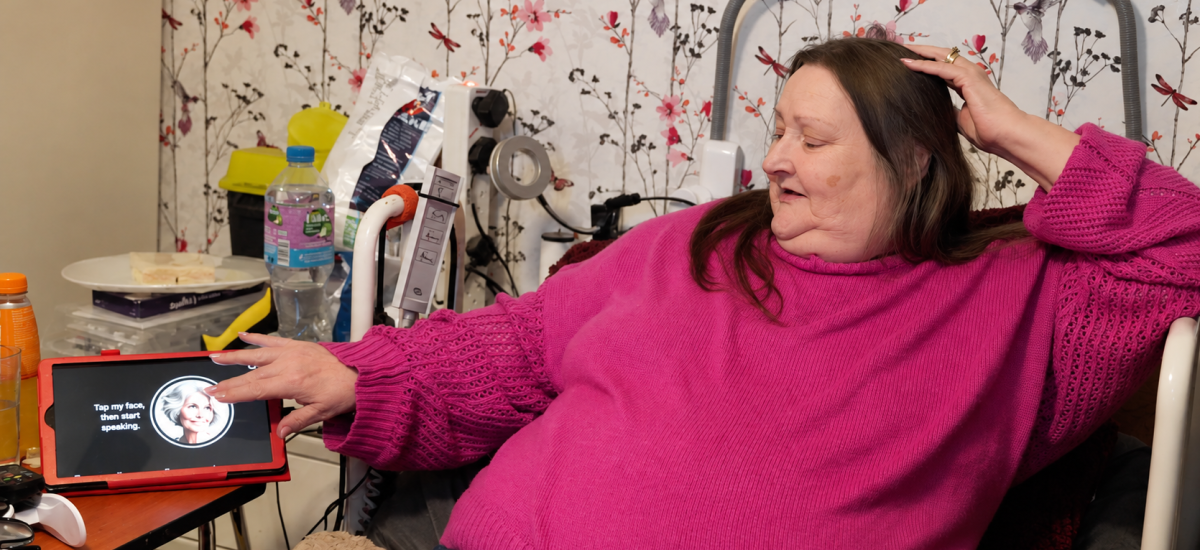
Yvonne was one of the first people to use Comfort Companions in January 2026. Her experience helps explain the value of having a voice to talk to during quiet moments.
Pilot learning and feedback
Developed through real-world use
From January to July 2026, Comfort Companions delivered a closely supported pilot with Age UK South Gloucestershire. It was deliberately small and designed to improve the service, not to establish results across a wider population.
of participants used the service independently after setup.
of participants were active in the final 30 days of the pilot.
of sessions took place outside weekday daytime hours.
Source: Age UK South Gloucestershire pilot usage review of all participants (n=8), including 164 post-onboarding session records.
Shaped by older people's feedback
The pilot generated 92 feedback and follow-up entries, helping improve companion voice and fit, readability, accessibility, device support and the setup experience.
Some participants valued being able to talk during quiet periods, including at night when it did not feel possible to speak to someone else.
Learning that continues
Participants included people who were housebound or facing significant access barriers, as well as a spousal carer. Practical feedback informed changes to how the service is delivered.
The Age UK South Gloucestershire pilot has concluded. Former pilot users who wish to continue are supported directly by Comfort Companions CIC.
In the media
Read, watch and listen
Independent coverage shares more about Comfort Companions, the people behind it and the experiences of older people using the service.
BBC News
A written overview of Comfort Companions and an older person's experience of using the service in everyday life.
Read the BBC article →ITV News
A short report on the need for companionship during long quiet gaps, showing Comfort Companions being used.
Watch the ITV News report →AI Haven't a Clue
A longer conversation about the origins of the service, a live demonstration, ethics, privacy and the ideas behind Comfort Companions.
Listen to the podcast →Why we started
Built with care, shaped by experience
Comfort Companions CIC was founded by Grant Mackenzie and his father, Tom, after seeing friends and neighbours experience loneliness and the pressures of caring for someone with dementia.
Those experiences shaped a simple aim: to use technology carefully, alongside human connection and trusted support, so older people are not left unheard during long quiet periods.
Grant and Tom share the story in this video, including how the early supported pilot helped them learn from older people using the service in their own homes.
Help widen supported access
Help fund Comfort Companions
When you join our supporter plan or make a one-off contribution, you help fund Comfort Companions for older people who may otherwise miss out. Your support helps cover access, supported setup and human follow-up. It is a contribution towards companionship for others, not a personal subscription or a guaranteed place for someone you nominate.
Supporter Plan
£12 / month
A recurring monthly contribution that helps fund ongoing access, setup and support.
Become a supporter1-Year Contribution
£144 one-off
A one-off contribution that helps fund one year of supported access for an older person.
Contribute for one year2-Year Contribution
£288 one-off
A one-off contribution that helps fund two years of supported access for an older person.
Contribute for two yearsWhy we became a Community Interest Company
The CIC structure gives us clarity about what comes first: community benefit.
Comfort Companions is still a limited company, but as a CIC it must operate for the benefit of the community and its assets are protected by a statutory asset lock. We believe loneliness and vulnerability should never become a source of private gain.
Financial sustainability matters because it allows the service to continue, improve and reach more people. The purpose remains the benefit we can create for the people and communities we serve.
Supporters, sponsors, grants and trusted partners help us widen access. Whatever the funding route, the person using Comfort Companions should experience supported companionship, not feel as though they have bought someone to talk to.
Contributions are received by Comfort Companions CIC and are not eligible for Gift Aid.
Stay in touch
Help bring conversation to more quiet moments
Comfort Companions is not yet available through open public signup. We are working to widen access through trusted, supported routes. Join our updates list to hear about wider availability, or explore the dedicated pages for care providers and community organisations.
For other enquiries, email hello@comfortcompanions.co.uk.
Privacy & Security
- The app uses the microphone when you choose to speak, not to listen in the background.
- Your speech is processed to provide a spoken reply. Your companion does not build a permanent history of conversations to remember in later sessions.
- We do not provide staff, families or delivery partners with a way to listen in to or replay private conversations. Limited conversation-related text may appear in technical records used to operate and support the service.
- With your agreement, a few basic details can be saved to personalise your companion. They are not automatically learned from your conversations.
- Our full Privacy Policy explains how we use and protect information from the apps, supported setup, matching quiz, website forms and updates list.
Service Disclaimer
- Comfort Companions are AI-powered digital companions, not real people. They are designed for friendly conversation and reassurance.
- Like other AI systems, they may sometimes misunderstand or give inaccurate information.
- They complement contact with friends, family, carers and volunteers; they do not replace human relationships or support.
- They do not provide professional medical, legal or financial advice, clinical care, safeguarding monitoring or emergency response.
- If someone is in immediate danger or needs emergency help, call 999.
- For urgent medical help that is not an emergency, contact NHS 111.